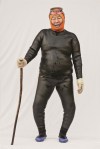
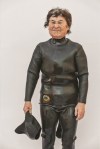
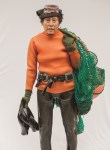
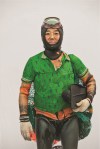
“For hundreds of years, women in the South Korean island province of Jeju have made their living harvesting seafood by hand from the ocean floor. Known as haenyeo, or sea women, they use no breathing equipment, although a typical dive might last around two minutes and take them as deep as ten metres underwater. Wearing old-fashioned headlight-shaped scuba masks, most dive with lead weights strapped around their waists to help them sink faster. A round flotation device called a tewak, about the size of a basketball, sits at the surface of the water with a net hanging beneath it to collect the harvest. Some use a sharp tool to dig conch, abalone, and other creatures from the crevices on the seafloor. … “For me, the photos of the haenyeo reflect and overlap with the images I have of my mother and grandmother,” Kim says. “They are shown exactly as they are, tired and breathless. But, at the same time, they embody incredible mental and physical stamina, as the work itself is so dangerous; every day they cross the fine line between life and death. I wanted to capture this extreme duality of the women: their utmost strength combined with human fragility.” ”
An EXCELLENT animation joke here! Please note that all of this has been animated on 1’s(which is to say that each drawing is only being held for 1 frame), where most anime is animated on 3’s(each drawing held for 3 frames). This makes the animation look especially fluid, but is extremely time consuming to do – even classic Disney cartoons tended to animate on 2’s as much as possible!
Also worth noting is the beautiful flow of S to C curves in the long hair – this is another thin that is often heavily simplified in anime.
What’s more, the entire shot is complicating the animation – the low angle with multiple head turns, the way the hand interacts with the hair, and the extreme foreshortening of the hand as it moves towards the camera.
Lovely animation combined with a wonderful awareness of the skills and pitfalls of the industry!
(This clip is sourced from an anime called Joshiraku, and the rest of it appears to be animated in a more traditional anime style)
Maybe medieval people happened upon a T-Rex fossil and came to a relatively logical conclusion that dragons existed.
I’ve read a couple books on this actually, thats exactly what happened. Also cyclops are from looking at bones from a certain type of baby elephant. The giant note hole and tiny eyes made it look like a single eye.
Yep, can confirm! And what’s even funnier to me is that back in the dark ages, Greek people used to find a lot of prehistoric bear skeletons – and those look exactly like human skeletons, except they’re like eight feet tall or something – so they naturally assumed those were the heroes of legend, and made armour and clothes for them and reburied them with the most splendid and sacred religious ceremonies they could think of? Fast forward five centuries, Athens’ all modern and rational, philosophers and scientists aren’t taking any shit from anyone – but the problem is, people will randomly find graves containing giant-ass warriors, so that’s something that can’t be explained away and yeah, demigods were a thing and yeah, they used to be eight feet tall and sorry I don’t make the rules.
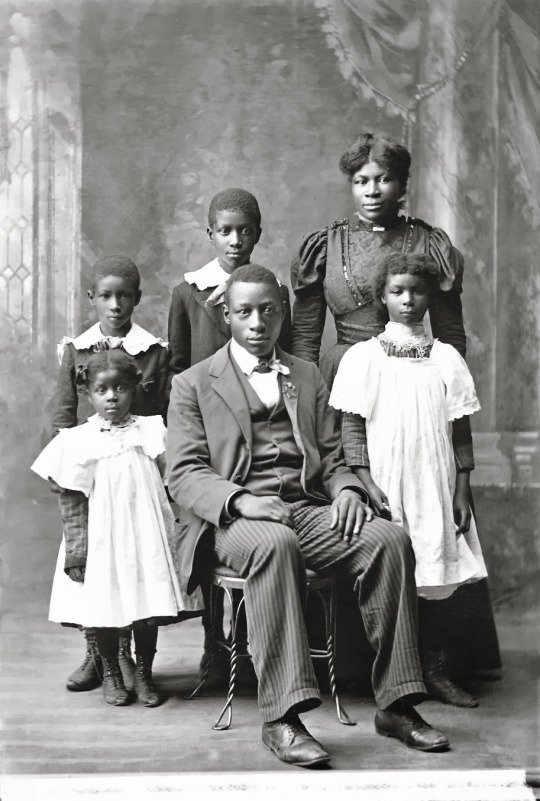
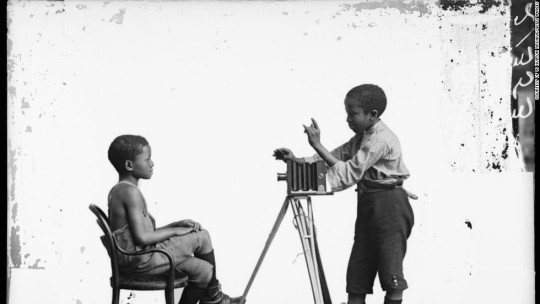
Pictured above is the Higdon family. This photograph was taken in the year 1898 in Britain. That is all we know about them.
Who were the Black Victorians? Mainstream history has virtually erased them from our minds and history books. We have been filled with images of slavery in America and across the world, but why is it that this chapter in black history was skipped? Why isn’t it equally common knowledge that in the midst of all of that darkness there was light, also.
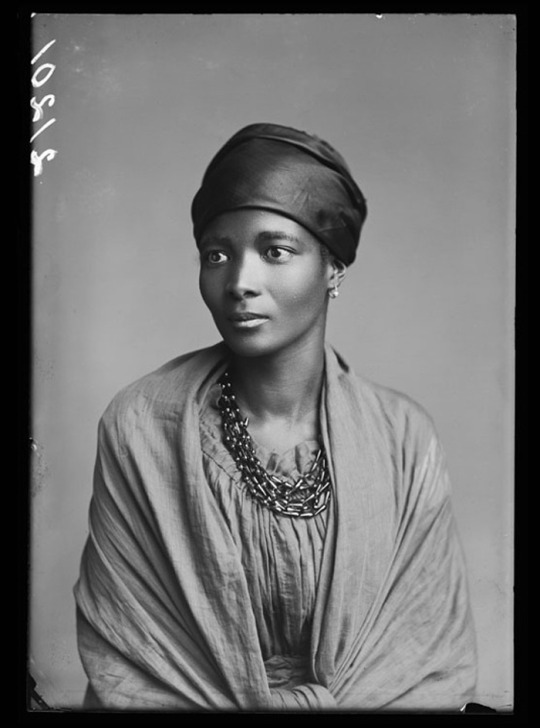
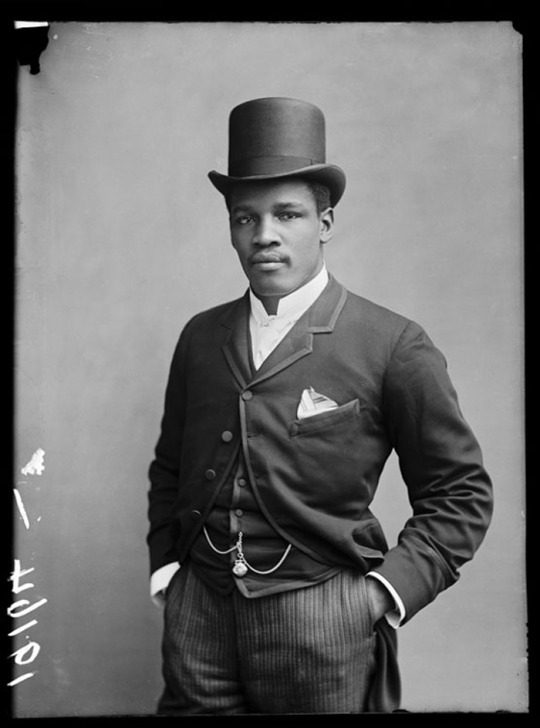
Never before seen photos were uncovered, giving us over 200 images of glances into our past. Many of the photos did not include names or any details whatsoever, cloaking these people in mystery for all of time.
At one point in history, people of color were included in high society and walked the cobbled streets of Britain. The women wore intricate, voluminous gowns and wore their hair in curls and chignons. The men in suits and fair business. This may not have been the case for all black people in Britain, but for some it was.
The Victorian Era was ruled under Queen Victoria, an era that is described as an opulent culture, although there were underlying bouts of poverty and child labor. History would like you to believe that black people didn’t arrive in Britain until 1948 during “The Empire Windrush”, when many Jamaican descendants entered the country, but that is not so. There has been proof to suggest otherwise. There is documentation that proves that it wasn’t uncommon to see black faces at a Shakespeare show. We’ve been there all along, humming softly in the background.
These images prove that you can’t take mainstream history at face value. Take the time to look behind the curtain and uncover OUR history. It’s as if our ancestors are just waiting for us to seek them out.
Who were the Black Victorians?
To see more of these images check out this video reel.
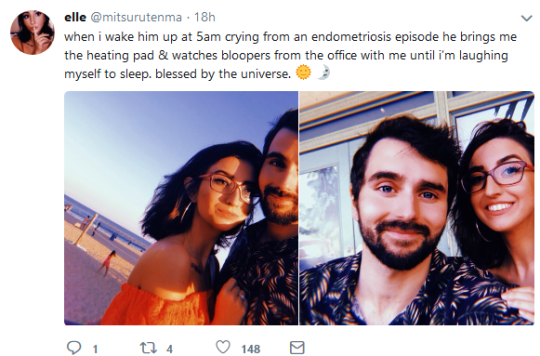
As an update, they’ve moved into a house together and are still super cute
Gundam Guy is truly a man of patience and diligence. From his attention to detail building his models to the loving attention and detail for his wife.
Hey all!
Elle is actually one of my ride or dies. We became friends about 8 or 9 years ago on this here blue website, and I love her so fucking much.
Their story is sweet, but unfortunately, they’re going through some hard times. Elle’s endometriosis is super bad, and she’s neck deep in medical bills, on top of being unable to work due to the disease. This is making it really hard for them to keep up with other bills, as she can’t supplement their household income.
She’s had a GoFundMe up for a long time now, but it still has a long way to go. They really do need the help so they can live their cute ass lives!!
If you can boost this and maybe consider donating (instead of that Kylie bullshit), it would be incredible. I’m posting this on her behalf since she doesn’t use Tumblr anymore.
A loaf of bread made in the first century AD, which was discovered at Pompeii, preserved for centuries in the volcanic ashes of Mount Vesuvius. The markings visible on the top are made from a Roman bread stamp, which bakeries were required to use in order to mark the source of the loaves, and to prevent fraud. (via Ridiculously Interesting)
(sigh) I’ve seen these before, but this one’s particularly beautiful.
I feel like I’m supposed to be marveling over the fact that this is a loaf of bread that’s been preserved for thousands of years, and don’t get me wrong, that’s hella cool. But honestly, I’m mostly struck by the unexpected news that “bread fraud” was apparently once a serious concern.
Bread Fraud was a huge thing, Bread was provided to the Roman people by the government – bakers were given grain to make the free bread, but some of them stole the government grain to use in other baked goods and would add various substitutes, like sawdust or even worse things, to the bread instead. So if people complained that their free bread was not proper bread, the stamp told them exactly whose bakery they ought to burn down.
Bread stamps continued to be used at least until the Medieval period in Europe. Any commercially sold bread had to be stamped with an official seal to identify the baker to show that it complied with all rules and regulations about size, price, and quality. This way, rotten or undersized loaves could be traced back to the baker. Bakers could be pilloried, sent down the streets in a hurdle cart with the offending loaf tied around their neck, fined, or forbidden to engage in baking commercially ever again in that city. There are records of a baker in London being sent on a hurdle cart because he used an iron rod to increase the weight of his loaves, and another who wrapped rotten dough with fresh who was pilloried. Any baker hurdled three times had to move to a new city if they wanted to continue baking.
If you have made bread, you are probably familiar with a molding board. It’s a flat board used to shape the bread. Clever fraudsters came up with a molding board that had a little hole drilled into it that wasn’t easily noticed. A customer would buy his dough by weight, and then the baker would force some of that dough through the hole, so they could sell and underweight loaf and use the stolen dough to bake new loafs to sell. Molding boards ended up being banned in London after nine different bakers were caught doing this. There were also instances of grain sellers withholding grain to create an artificial scarcity drive up the price of that, and things like bread.
Bread, being one of the main things that literally everyone ate in many parts of the world, ended up with a plethora of rules and regulations. Bakers were probably no more likely to commit fraud than anyone else, but there were so many of them, that we ended up with lots and lots of rules and records of people being shifty.
Check out Fabulous Feasts: Medieval Cookery and Ceremony by Madeleine Pelner Cosman for a whole chapter on food laws as they existed in about 1400. Plus the color plates are fantastic.
ALL OF THIS IS SO COOL
I found something too awesome not share with you!
I’m completely fascinated by the history of food, could I choose a similar topic for my Third Year Dissertation? Who knows, but it is very interesting all the same!
Bread fraud us actually where the concept of a bakers dozen came from. Undersized rolls/loaves/whatever were added to the dozen purchased to ensure that the total weight evened out so the baker couldn’t be punished for shorting someone.
[wants to talk about bread fraud laws and punishments]


































 AngelMihe