someone: so what do you think is the solution to homelessness?
me, socialist:
Let homeless people occupy peopleless homes, build houses for use rather than exchange, 3D print comfortable houses in a day, convert corporate skyscrapers into housing and commercial malls into publicly-accessible community centers with living commons and entertainment
When you say it to people and they break
“But the money? … we can’t just? But, Money? We can’t just… help… people? Can we? The Money. We can’t just help people? Like that? We can’t just? Money?”
There’s more to it than free real estate.
A massive portion of homeless people are mentally ill, and many of those illnesses aren’t being treated. Homeless people who have been on the streets and had their illnesses untreated for most of their lives aren’t going to adjust super well to suddenly having a place to live.
We need to build safety nets. We need social workers and mental health care professionals to help the homeless.
Every person deserves a roof and health care. Those two things need to go hand in hand.
I expected Coco to be a very charming and beautiful film that I would really enjoy, and it was!
What I didn’t expect is that it would be a meditation on the importance of record-keeping, ethical archives, and proper attribution. But it was, that, too! And it was that in a really careful and aware way that surprised me a little.
(Keep in mind that I am a mere librarian and certainly not an expert on archives in any way, so there’s probably a lot more to be said about this from an expert point of view.)
But let’s think about this for a moment. The central injustice in the film that must be corrected isn’t the conflict between Miguel and his family (they work it out). Instead, it’s a crisis of misattribution. Hector is a genius songwriter, but his work has been inaccurately attributed to Ernesto de la Cruz. Interestingly, De la Cruz has also murdered him, which was obviously a bad thing to do, but the crisis that we face in the film stems much more directly from the plagiarism than it does from the murder. Because his work has been stolen by someone else, Hector has been forgotten, abandoned. The film sets up a mythology that makes it clear that being forgotten after death is itself a kind of death (the ultimate death, really), which means that when de la Cruz takes his work in that way, and uses it to make himself rich in the afterlife… that is, itself, almost a second murder.
A brilliant colleague of mine once said: “Information has value because people have value.” Remembering Hector for his work is important, because Hector is important.
But there’s more to it than that. The film makes a distinction between public memory and private memory. Tributes from fans are nice to have, but what really matters – the thing that lets spirits visit the living – is the family ofrenda. A major part of Miguel’s journey in the film is to realize why the ofrenda is important and what it means to be part of a family that is committed to remembering the dead. But what is remembered is also really, really important. Hector makes this distinction between his songs “for the world” and the song “Remember Me,” the one that became so famous, which he had really written for Coco alone. And looking back after all the plot twists have been revealed, it becomes very clear why he doesn’t want Miguel to play it for the crowd and why he winces at its popularity. It’s an intimate family memory that’s been made public and stripped of the personal meaning it has for him. It’s not just (at least from an audience perspective!) that it’s emblematic of the tension for him between “playing for the world” and staying close to his family. It’s the perfect encapsulation of the way that information (works of art, documents of all kinds) change their meanings in different contexts, and the importance of intimate documents in that intimate context versus in public.
WHICH IS WHY the ending of the movie was so moving for me. Coco has everything she needs to create the necessary archive that will commemorate her father’s work, and with the help of her family, she does – but she creates it right there in the village, where Hector’s family lived, not away in some big city university or more official archive. Although his music is internationally famous, the people who really need to remember him are those who are intimately connected to him, and whose memories of him have been distorted and have faded. (Imelda is an interesting figure in this respect. (I love her though)) And what we’re left with, aside from that beautiful wall of letters and song lyrics, is the recognition that records must be preserved within the community in which they originated. Indeed, I’d argue that the film is an argument that the people connected to someone are those who are best equipped to organize, present, and interpret their records.
(I do wonder whether they consulted a professional archivist about preservation techniques, though. Those papers are pretty old! I wouldn’t want them to fall apart!)
…I MAY also have been a little impressed by the film’s invitation to learn more about Dia de Muertos in a library, but it’s really involved in knowledge preservation in a much deeper way.
Working on a new gifset, I’ve noticed again this beautiful detail in the post-cenote scene:
The way Hector shakes his head briefly when Imelda says “You leave me alone with a child to raise, and I’m just supposed to forgive you?”…
… and the way Imelda shakes her head with horror when she sees him collapsing by the final death’s spasms.
Both gestures are very, very subtle, it’s easy to miss them while watching the movie. But you find a lot of little treasures like these ones when you’re working frame to frame.
I’m still astonished of how awesome the body language is in Coco, at every level, from Hector’s histrionics to Imelda’s grimaces.
So I’m
going to reblog this to add some thoughts, now I’ve got some more time.
I think
this is one of the most important scenes in the whole movie, for two main
reasons:
a) How
Héctor manages Imelda’s anger. This has been said many times before, but let’s
repeat it again: he accepts all she has to say without a word to excuse
himself. He’s aware of his own mistakes, he’s aware of her pain and all the
troubles she had to go through. He never tries to undervalue her feelings,
which always made me think he knows pretty well he wasn’t a saint in the past.
The movie never tells us what happened exactly when Héctor left his home to
tour with Ernesto. We can see in the papel picado intro that Imelda is not
pleased, but she lets him go with a goodbye kiss. She wasn’t mad at him then.
But what about him? What was he thinking about, leaving his wife and his
toddler alone like that? He likely was quite an asshole, or a pretty
irresponsible brat at least. And it’s ok, he knows it. He’s had almost a
century to think about how stupid he was. His behavior has no excuse. All of us
love Héctor, he’s a good man, he’s a great guy who’s suffered A HELL unfairly,
he doesn’t deserve all the crap he had to endure… but he’s not perfect either. And
that’s a great lesson, because good people aren’t flawless or infallible. Good
people are people, and they make mistakes and mess things up. So Héctor was an
idiot back then and he accepts his fault with sincere remorse.
But when
does he try to cut Imelda’s speech? The only time he tries? When she says ‘I’m
just supposed to forgive you?’. And he shakes his head and tries to speak,
because no, you don’t have to forgive me, I’m not here to beg your forgiveness,
I just want you to know that I’m sorry. And he says it later: ‘This is my
fault, not yours. I’m sorry’.
It’s a pity
the Spanish translation mess this moment, because he says perdóname (forgive me)
instead of lo siento (I’m sorry) and no, it’s not the same. When you ask
someone for forgiveness, you’re forcing that person to make a decision
regarding your actions. You’re forcing them to absolve you or not, so you put
the responsibility on them. But when you say I’m sorry, you’re expressing your
own regret for whatever you made, as well as your own responsibility. And you
don’t ask anything for the other person; giving you their forgiveness depends entirely
on them. That was what Héctor did here: expressing his regret, asking for
nothing. And this is one of the greatest moments of this character, what actually
makes him a really good man.
b) How
Imelda realizes the weight of her own actions. I have the theory that Imelda
kept Héctor away in the Land of the Dead not just because of her resentment,
but also because of pure fear. Her life was far from easy; she had to make hard
decisions to make it bearable. But what if Héctor pops up now with a perfectly
acceptable excuse that explains everything and turns all her pain into a waste
of time and energy? What if all she did was also stupid? I think she’d be
utterly unable to process that. So, as we say in Spanish: ojos que no ven,
corazón que no siente. She refused to listen, clung to her pain and her own
version of what happened and went on. At least a part of herself would think
that’s more tolerable than seeing her whole world upside down.
We see a
glint of that fear in this scene, too, when Miguel says Héctor was murdered.
She almost breaks down, but she braces herself again quickly and goes on with
her mantra of OK, BUT YOU LEFT. The problem? Hector’s dying. Again. And she
hadn’t count on that. Even after all she did, after how hard she tried to
forget him, she didn’t think for a moment about the final death. That’s written
in her face (how horrified she looks), when she sees Héctor collapsing at her
feet. Perhaps she thought he’d be around forever, away but safe and sound. She
never thought her decisions could kill him again. She never allowed herself to
think about it. And now the reality slaps her in the face and she shakes her
head too, as in denial. You’re losing him again, gal. And this time it’s also
your fault.
And then
she softens. She stops yelling, stops pushing him away, and listens. And she
looks so damn vulnerable, so broken. She doesn’t forgive him (she can’t, it’s
still too early for that, and Héctor accepts it too), but she lets him apologize
and accepts his apology without further arguments. What a face she makes when
she hears his ‘I’m sorry’. And she agrees to help. All that happens after this
is like a shock therapy for her, to take her out of that loop of anger, pain,
fear and such bad feelings. By the end of the night, she’s already forgiven him,
and that’s the great lesson about Imelda: even knowing she was rightfully
furious, she understands she also made mistakes and she’s up to fix them. And
that’s not easy; that’s so damn difficult after so much time. But she leaves
aside her resentment, she embraces music again, all just to save her family.
Because family comes first, even if that family is a bit messy.
So what do we take form this scene? The
acceptance of our own faults, the way to apologize respecting others’ pain, our
right to be upset and even so the importance of forgiveness, at its own pace.
Wait…wait a minute, wait a minute, I just realized something!!!
What if she did know?
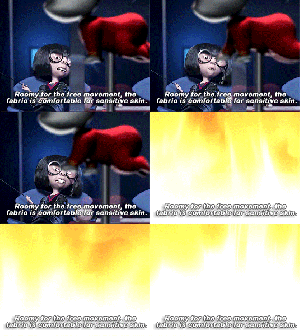
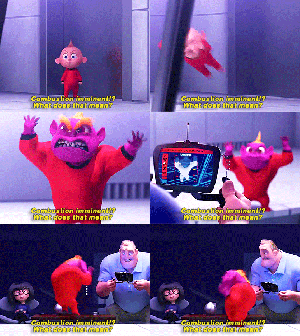
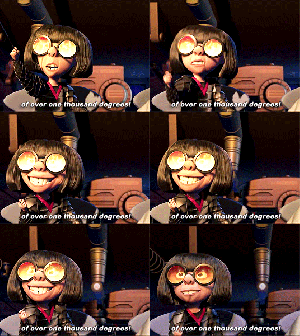
Think about it, Helen goes in to talk to Edna but Edna has already prepared a series of supersuits that are perfectly designed for every situation she and the kids are going to be in. And for some reason, we’ve all just accepted that, yeah, she’s Edna Mode, she would know these things, she’s just like that.
But what if we’ve all been missing something right in front of us?
We know Edna has affiliations with the government agency and has obviously been making suits for decades. Do you think the government is just going to get a random fashion designer to make these suits? Absolutely not.
They’re going to get a Super.
What if Edna is a Super with the power of future-vision?
That’s how she knows exactly what suit to make, that’s how she knows that the kids are going to be in danger, that’s how she’s so aware of everything going on around her and catches everyone off guard.
She never looks back; she looks forward.
(Sorry for hijacking your post, OP.)
which is why the whole cape thing hit so hard. she didnt see it coming
I love the idea of a Super whose power is to amazingly see into the future and she just uses it for fashion design.
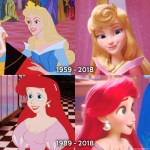
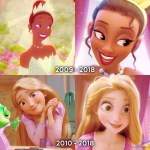
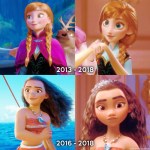
Ever since news of the Thundercats reboot dropped, there’s been an idea going around that there’s an ongoing samey trend in current animation coined the “Calarts” art style. Many are starting to push the idea that this art style sucks and some even go as far as say it’s overabundance is ruining animation (despite the fact that some of the best shows in recent years have been made in this perceived style). This carries the implication that in times before our own cartoons were diverse in style and in intent. I’d like to dash that assertion.
The fact is, trends in animated entertainment come and go, just like music or comic books or any art form really. It’s so noticeable one can segregate them by decade like I’ve done so above. Of course there are exceptions to every decade and of course the era names I listed above aren’t official, but my point still stands. Trends get started because peoples tastes change, and usually taste changes because a game changer comes along giving the audience something they never knew they wanted (I’d argue the big game changer for the 2010s onward was Adventure Time). We’re entering the end of the 2010s real soon and based on the reaction to the new Thundercats it looks like people have had their fill and long for a new way of doing things, which is fine. My point is, the ‘CalArts’ art style being everywhere is nothing new nor is it inherently worse than generations before it.
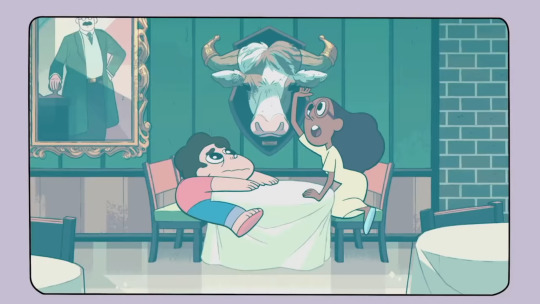
In “Full Disclosure,” we see Steven swipe through the photos on his phone, and there’s this one of Steven and Connie at a restaurant.
Notice the painting and the stuffed cow head. Stuffing and mounting an animal’s head is usually what you do with an animal that you’ve hunted and killed, not with domesticated farm animals that are slaughtered for their meat.
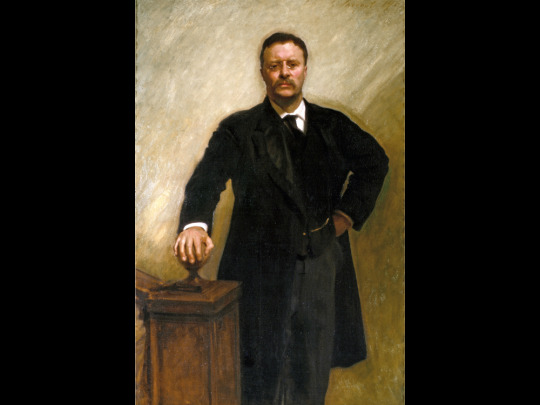
And that painting is based on a real painting of Theodore Roosevelt, who was (among many other things) a big game hunter.
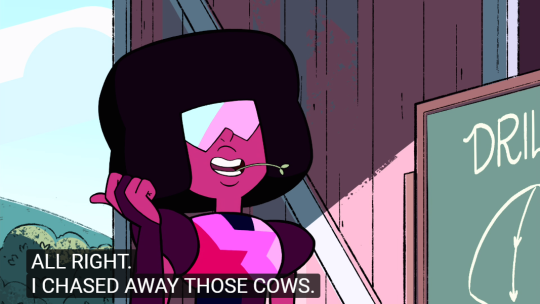
And then there’s this line from Garnet in “Too Far:”
Are cows a wild animal that people hunt for sport in this universe?
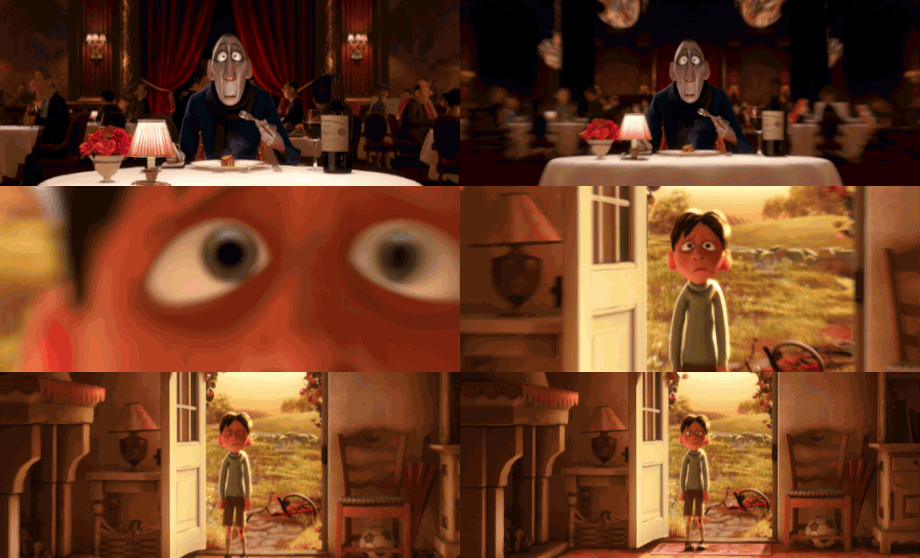
Filmmakers take note- This five second scene not only fully describes a characters backstory, but the entire reason he acts the way he acts through the film, taking him from a villain to a sympathetic character and justifying a total reversal of his actions in the present. In five seconds, this movie does for the development of a character more than most movies do in two hours. This is why you should be studying Disney and Pixar along with Martin Scorsese and Stanley Kubrick, and ignoring professors and elitist students who deride them as “kids stuff.”
wasn’t there a theory that Anton’s childhood cottage is the cottage Remy learned his craft from eavesdropping inside before travelling to Paris, and the recipe he’s tasting really is his mother’s ratatouille?












 AngelMihe