Today I was rehearsing with the guitarist from the show I’m doing and I was coughing up a lung bc I’m sick and I was just kidding but I told him he needed to bring me a lemon for me to slice up and put in a cup of tea and so I show up to the show tonight to get ready and he sets down a big ass lemon on my dressing room table and then brings out like 5 boxes of Halloween Oreos and for those of you who pay attention to my posts you know what a big fucking deal that is and so long story short I now have a lemon and more Oreos than I know what to do with
update: tonight he brought me 2 lemons and a bag of cough drops. i’m running out of room in my fruit drawer in the fridge because i have so many damn lemons.
LIFE IS GIVING U LEMONS, MAKE SO LEMONADE !!!!!
okay but it wasn’t life it was a guy named howard
Update: tonight there were 3 lemons
Update: 4 lemons
Another update: I have 10 lemons and a date for Friday night
update: lemon boy carved pumpkins to ask me to be his lemon girl so lemon boy is now lemon boyfriend
update: lemon boyfriend and lemon girlfriend are very happy
update: lemon boyfriend and lemon girlfriend took a trip to the mountains this summer and decided that once they’ve graduated & are successfully pretending to be grown ups they will become lemon husband and lemon wife
hey guys guess what it’s been 2 years since the pumpkins and
Before I get going, I’m 75% deaf, as some of you know, semi-reliant on hearing aids and lip reading. My first languages were Makaton sign and then BSL. I now use spoken English. This is part one of two. People are People covers characterization and toxic tropes.
There are a lot of issues I find with how deaf people are represented in books, when represented at all. I would love to see more deaf and hard of hearing characters in the books I read- without having to read books specifically about deaf/HoH people- but when I find them, they’re grossly undercharacterized or stereotyped. Authors write them in a way that sets signing language characters apart from speaking characters as if they are inferior, and this makes my blood boil.
Some technicalties
I’ll keep this brief.
You may have heard that “deaf” is a slur and you should use “hearing impaired”. Don’t. I’ve never met a deaf or hard of hearing person who believed that. Use deaf for people who are deaf, and Hard of Hearing (HoH) for people who lack hearing. These can be interchangeable depending on the person. This is why sensitivity readers are a useful part of the beta process.
Sign language is incredibly varied. It developes in the same way as spoken language. Fun fact: in BSL there are at least half a dozen ways to say bullshit, my favourite of which is laying your arms across one another with one hand making a bull’s head sign and the other hand going flat, like a cowpat. It’s beautifully crude, and the face makes the exclamation mark. Wonderful.
There are different sign languages. Knowing more than one would make a character multi or bi-lingual, even if they are non-speaking.
Makaton is basic sign language used by children, and it mirrors the very simple language used by toddlers.
Yes, we swear and talk shit about people around us in sign language sometimes, and no, it isn’t disrespectful to have signing characters do this. Just remember that we also say nice things, and random things, and talk about fandoms and TV shows and what we’re having for dinner, too.
Each signed language is different from another. ASL and BSL? Nothing alike. Just google the two different signs for horse.
Remember that sign language is a language, equal to the spoken word
Therefore, treat it as such. Use quotation speech marks and dialogue
tags. You only need to explicitly state that this character uses signed language once, and then let your modifiers and description do the rest.
It isn’t a form of “sub-speech" or “making hand actions”- sign language is a language all on its own: it has its own grammar rules, syntactical structures, punctuation, patterns, idioms and colloquialisms. For example, “what is your name?” becomes “Your name what?” with the facial expression forming punctuation in the same way that spoken English uses alterations of prosodic tone (inflections). There is even pidgin sign; a language phenomenon usually associated with spoken language.
In the same way that you would describe a spoken-English character’s tone of voice, you would describe a signed-English speaker’s facial expressions and the way that they sign- keeping in mind that these things are our language’s equivalent of verbal inflection.
So please, none of that use of “special speech marks” or italicised
speech for sign. If your viewpoint character doesn’t understand signed
speech, then you take the same approach that would be used for any other
language they don’t understand, like French or Thai. E.g “He said something
in rapid sign language, face wrinkling in obvious disgust.” is a good
way of conveying this. The proof that you’ve done this well is in whether or not you can switch “sign language” for French or something else, and it would read the same.
Don’t be afraid to describe how things are said, either.
Sign language is such a beautiful and expressive way of talking, and to
see a writer do it justice would be truly fabulous. Putting this into practise:
“Oh, I love maths!” She said, fingers sharp and wide with sarcasm. She raised her eyebrows.
“I’m sorry.” He replied and made his face small, but could not keep the grin forming. She was starting to laugh, too.
For the sake of readibility, I’m putting the rest of the information in part two.
This is part of my weekly advice theme. Each week I look at what you’ve asked me to help with, and write a post or series of posts for it. Next week: settings and character development (including heroes, anti-heroes, villains, and every other kind of character).
There are many ways a person can be manipulative, and therefore many ways a character can be. Here are a few!
Not respecting boundaries, both physical and emotional.
Blames others for their own faults/mistakes, or twists a situation to make it the fault of another.
Gives aggressive and/or dismissive body language while others talk, by way of expressions, eye rolling, shrugging, sighing, head shaking. (Or even while others are expressing something important/exciting to them)
Plants seeds of doubt, or gaslighting.
Minimizing other’s joy, sorrow, and other strong emotions, as well as minimizing their own cruelty. (”It didn’t hurt that bad,” “Can’t you take a joke?,” “I could be worse, you know.”)
Okay so I’ve written romance in stories before, but I’ve never written A romance, so I’m just going to compile all of the knowledge I’ve gained from writing romances within stories and from reading romances.
This is mainly going to be about plot and structure, so for the actual romance part of it you should look at my post about how to write healthy relationships here and another one written by another user that I found helpful here
1. Don’t write paragraphs about how much they love each other
There is absolutely nothing interesting about long pages of flowing prose that describe every single thing about their partner, in excruciating detail, that they adore and why.
It’s just not exciting, and it’s even worse when the reader goes “They say that they’re in love, but they’re never around each other. They don’t do anything that signals that they’re in love.”
That is the LAST thing you want someone to say about your romance; romance actually has to be romantic, and if the characters don’t do anything that show they’re in love except say they’re in love, then you have a major problem on your hands.
Ultimate “Show don’t tell” here.
Instead of scriptually regurgitating onto the page how much the main couple cares for each other, try writing in things that show the reader how much they love each other.
Some things a couple in love might do:
– Love notes/letters
– Snuggles while watching TV
– Protectiveness (but not overly protective or stalkerish)
– You know, actually hanging out (I hate it when couples whoa are supposedly in love never spend time with each other ever)
– Little gifts. Not big things, just buying something in a store because it reminds them of their significant other.
– Playing video games together
– Getting into playful arguments/debates
– Getting into actual arguments over petty things like who’s paying for lunch (Couples can disagree! In fact, it would be weird if they DIDN’T disagree ever!)
– Going on bike rides together
– Just spending time in one another’s presence. They don’t even have to be interacting, just doing their own thing while sitting together.
– Go to the movies
– Compliments! ALL OF THE COMPLIMENTS!!!! And not just “You’re the most beautiful person ever blah blah blah”. Little things, like “You look cute” or “I like your perfume/your hair smells good” “I like your clothes”
– I’m willing to give more examples if needed
2. Have a valid conflict
OKAY SO I’M ACTUALLY GETTING RILED UP BECAUSE YOU HAVE NO IDEA HOW MANY BOOKS I’VE HAD TO COMPLETELY ABANDON BECAUSE OF THIS.
You cannot, SHOULD NOT, make a conflict in the story that is easily resolvable, and for this reason many romances fall short in the “plot” area. Just because it’s a romance and there are people kissing in it doesn’t mean that it doesn’t need the careful planning, consideration, and development as other stories where there’s a big villain going around killing people.
There should be a set problem, a series of events that take off because of said problem, and then a path to the solution that can’t be fixed with a snap of the fingers. Also, I find that romances have recurring conflicts: The same problems happen over and over again, and it’s just annoying. Just make a game plan and stick to it.
If the reason why your characters can’t be together/get along is because one or both of them of them just??? Don’t want to tell the truth??? Or they want to withold random information??? For some reason??? Then that’s not a plot. It’s just going to make your readers angry and frustrated.
Part of a healthy relationship is talking to one another, and if your characters can’t even do that, then they don’t belong together.
Also, if your conflict involves a love triangle, please consult my post here [x]
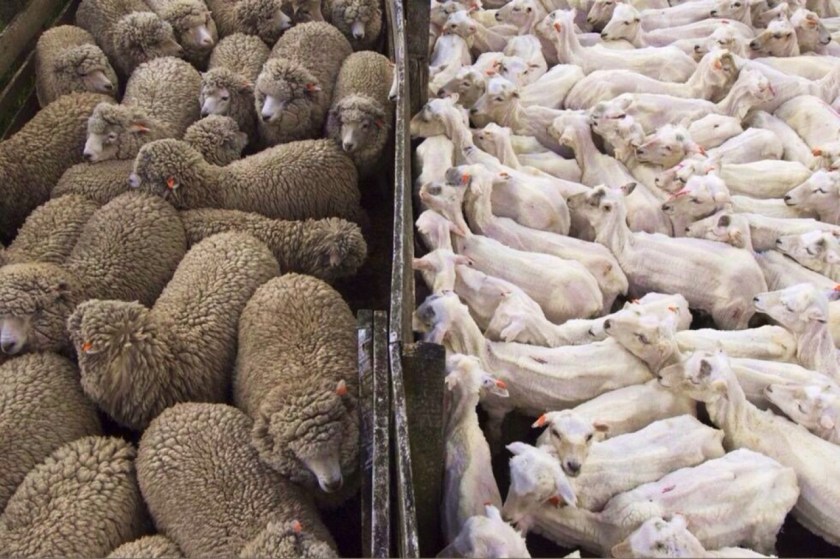
Fuck this. Does everyone just not see the blood scrapes on some of their backs and faces???!!! Anyone, seriously, correct me if I’m wrong because this is making me upset af
Domesticated sheep need to be sheared because they don’t shed their coats on their own and it can be bad for their health if it gets too big.
Also, it looks considering how close they cut that it went fairly well. I see like 2 nicks maybe, but with the photo it’s hard to tell. I mean, unfortunately, you’re going to nick a few animals because they don’t understand the order of “stand still” very well.
Sheep can die from heat exhaustion if they aren’t sheared.
Also, their skin secretes lanolin, which quickly soothes and heals any nicks they get during shearing.




 AngelMihe